Lionfish and Scorpionfish - Scorpaenidae
Although Lionfish and Scorpionfish may appear very different at first glance, they are actually very closely related.
Both are predators equipped with toxic venom in their dorsal spines, both have a similar body shape and their features are not dissimilar.
Scorpionfish sit perfectly camouflaged on the reef waiting for prey to swim past while their flamboyant.long-finned cousins the Lionfish hover over the reef, boldly displaying their elegant plumes.

Love marine life?


Luckily this highly poisonous fish only uses its lethal weapon in self-defence, so you are unlikely to get stung unless you sit or stand on one.
Family variety
Behaviour
Lionfish are often found under overhangs and tucked in holes while resting. They often hover gracefully above the reef when hunting, displaying their beautiful fins to their full extent.
Reproduction
Diet
Defences
FACTFILE
 SPECIES: 222
 SIZE RANGE: 5-50 cm
 DISTRIBUTION:
Global. Widespread throughout region.
 HABITAT:
Members of this family are mostly reef dwellers.
 THREATS:
Many species are highly prized in the aquarium trade. It is impossible to breed them in captivity so all individuals are captured from the wild.
Identification tips
-
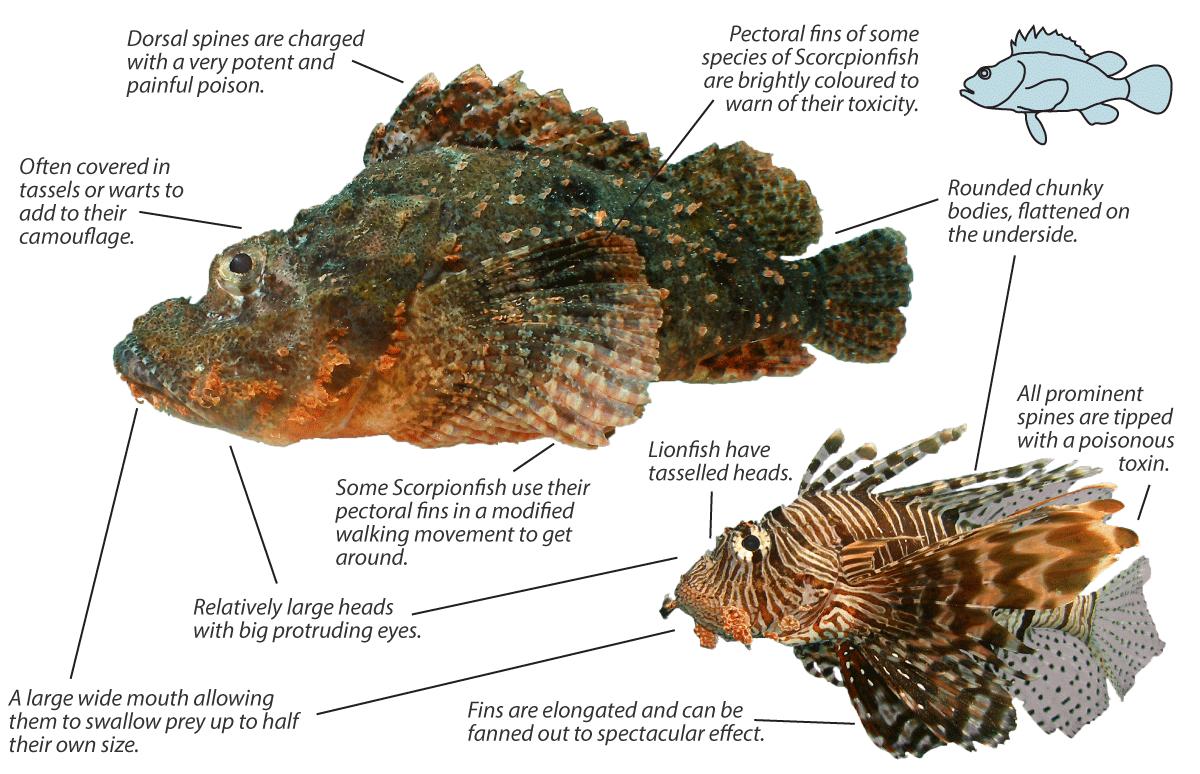
Scorpionfish and lionfish are relatively large, tassled heads with big protruding eyes and large, expandable mouths.
-
Rounded chunky bodies, flattened on the underside.
-
Lionfish in particular have prominent spines tipped with a poisonous toxin.
-
Pectoral fins of some species of Scorpionfish are brightly coloured to warn of their toxicity.
-
Scorpionfish are often covered in tassels or warts to add to their camouflage.
-
Some Scorpionfish use their pectoral fins in a modified walking movement to get around.
Popular species
Here are some of the Scorpionfish and Lionfish species you might come across on your next dive.
Common Lionfish
(Pterois volatans)
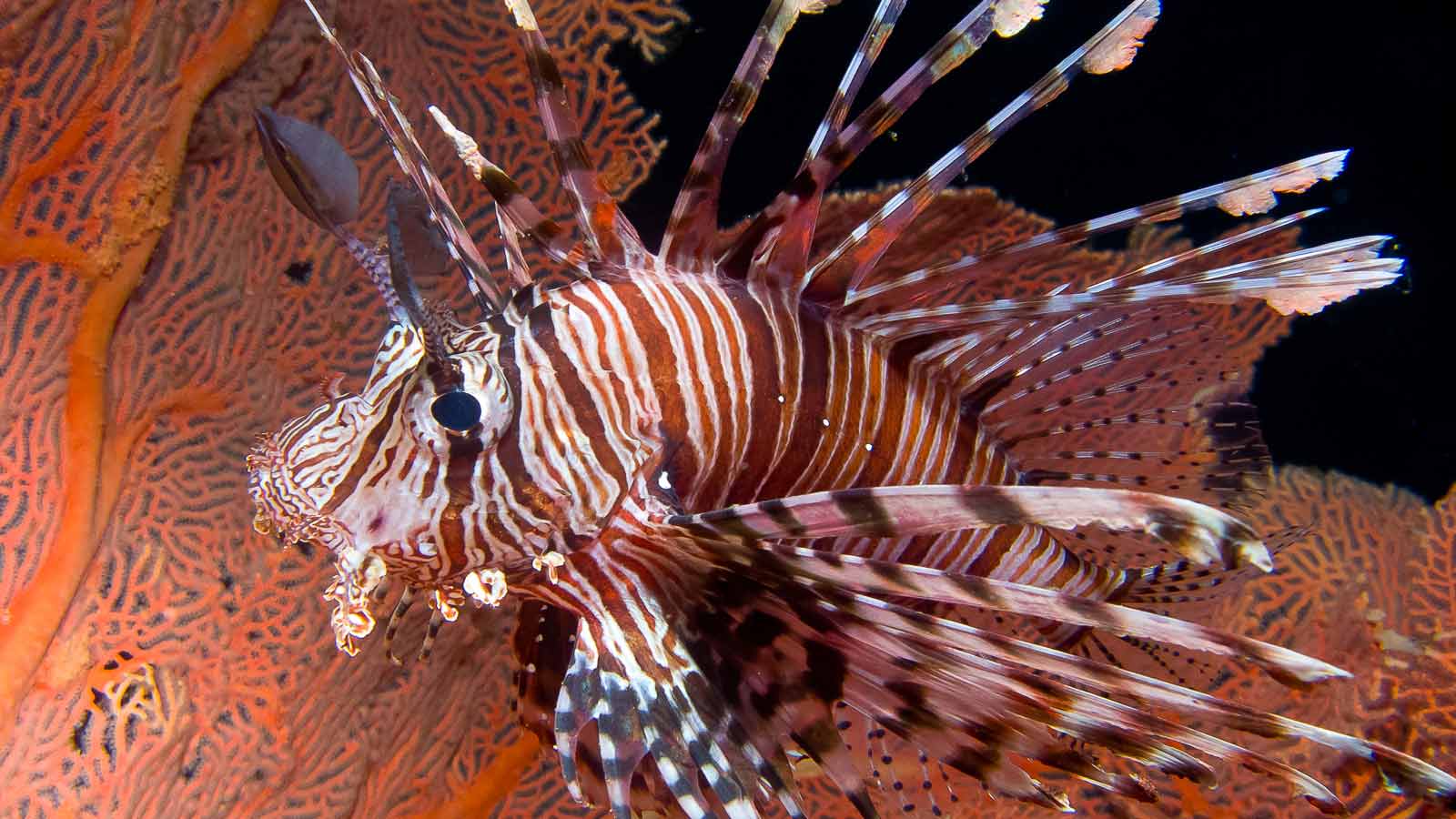
A larger lionfish, growing up to 40cm in length. Often seen hovering above the reef stalking prey. These lionfish can be very aggressive over their hunting territory. Juveniles are quite dark with almost translucent fins that bend in the current.
Bearded Scorpionfish
(Scorpaenopsis oxycephala)
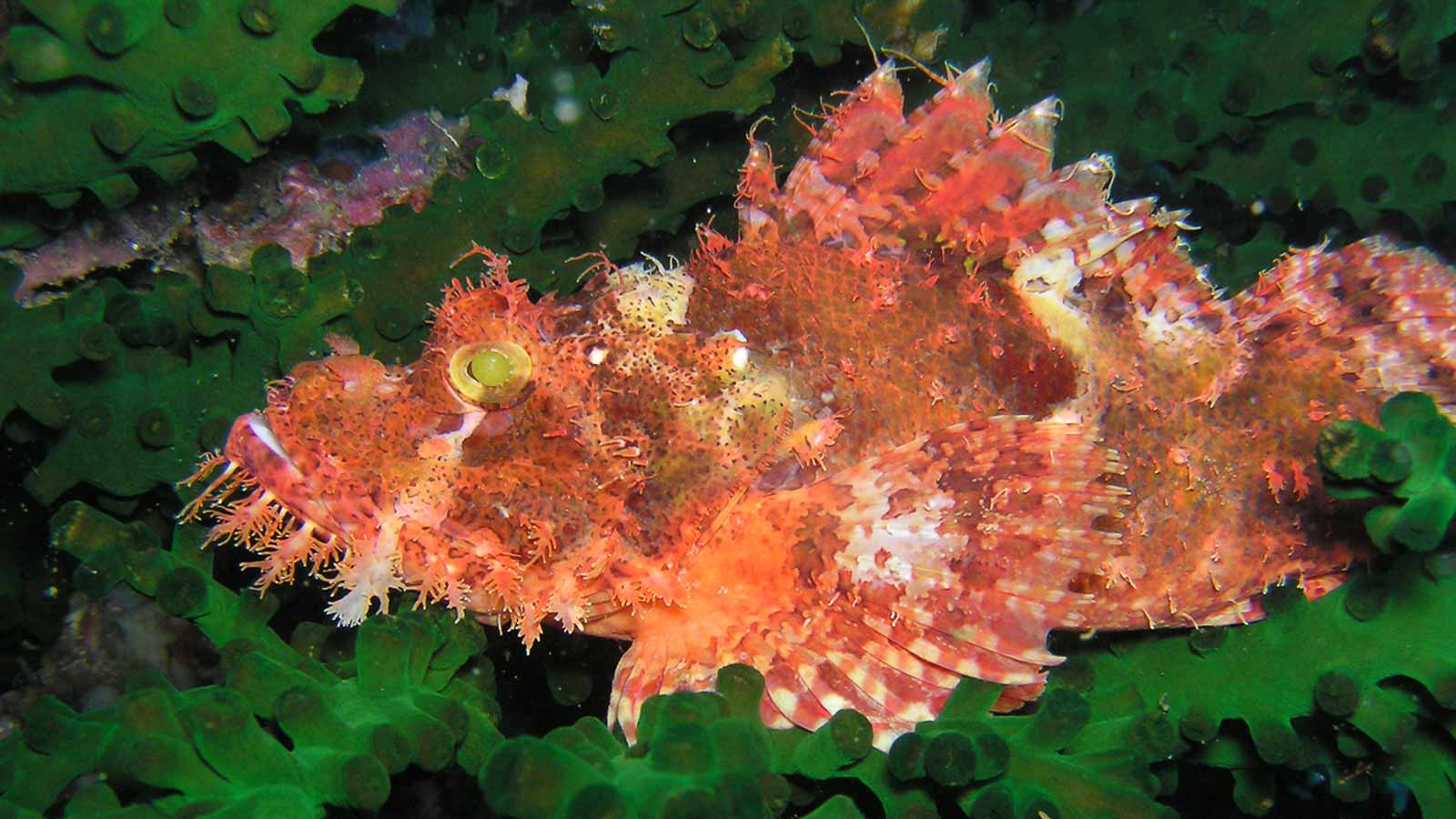
A very variable species whose colour can range from pale grey or white to dark red. Adults can measure up to 36cm. Completely covered in tassels, these fish blend into their backgrounds perfectly and are usually found lying hidden on the reef or sea bottom waiting for suitable prey. Can be locally common.
Lacy Scorpionfish
(Rhinopias aphanes)
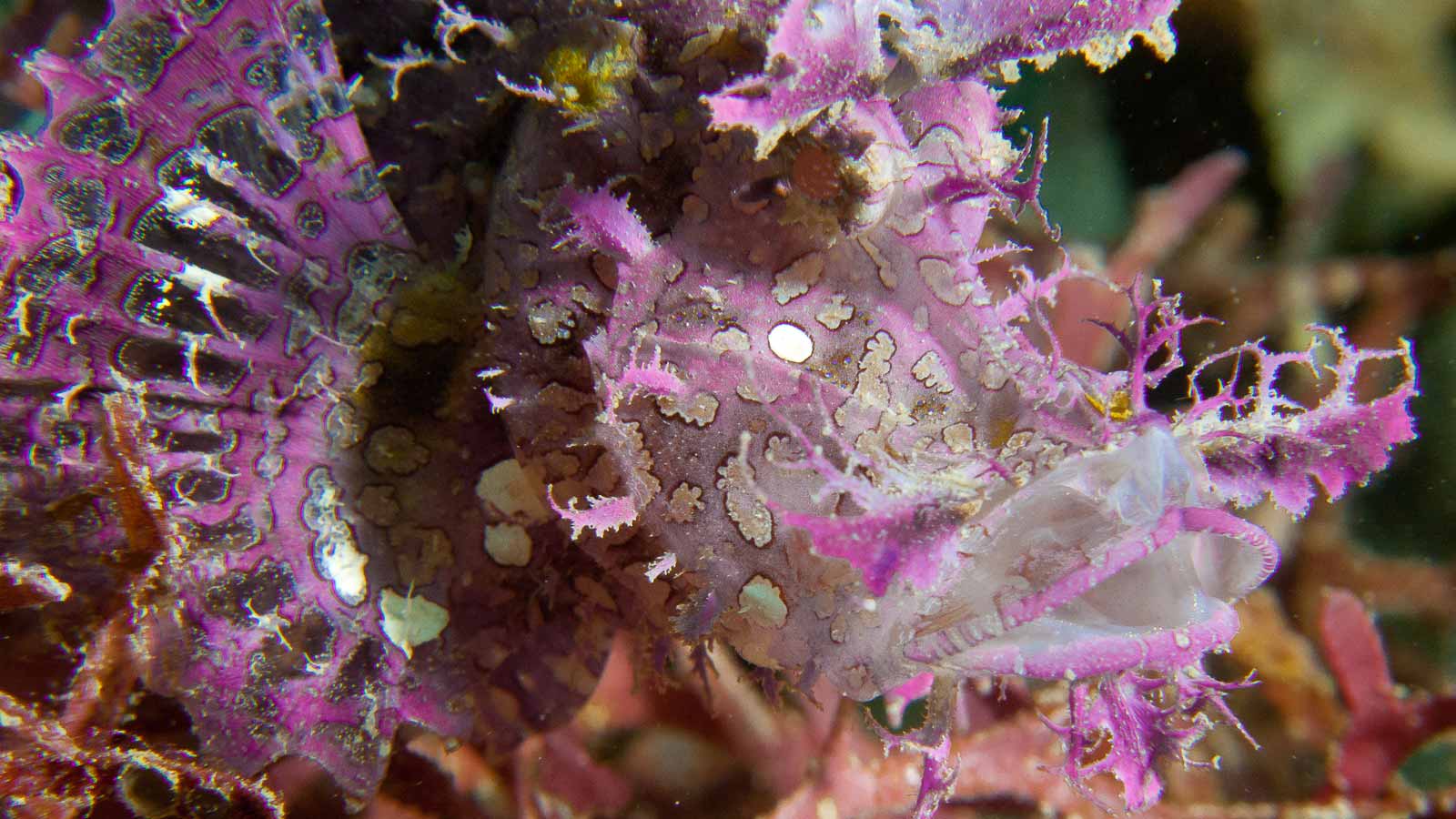
This amazingly camouflaged fish can be plain or covered in dark outlined spots. Variable shades from lilac, to yellow and red. Like the Weedy Scorpionfish, he is much sought after by divers, especially underwater photographers.
Puerto Galera
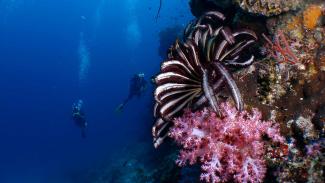
Originally a safe harbour during typhoons, Puerto Galera has become one of the Philippines' most popular tourist & diving destinations.
Situated only 150km south of the capital Manila, the curious geography of the area has created not only a perfect natural harbour, but also many picturesque beaches and coves to enjoy.
Similan & Surin Islands
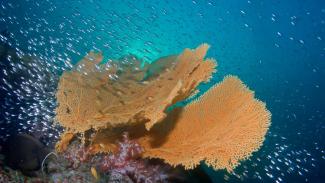
The Similan Islands in Thailand are the country's most famous diving destination, offering great visibility, stunning corals and prolific marine life.
Accessed primarily by liveaboard, the Similan Islands are in a strictly controlled marine park and are considered by many to be the crown jewels of Thailand’s diving. As well as the diving, they also offer picture perfect beaches and unspoilt habitats.
Phuket & Phi Phi Islands
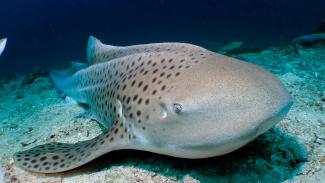
Diving in Phuket has always been hugely popular due to its ease of access and choice of dive centres. It is one of Thailand's top tourist spots.
Phi Phi Island is equally popular. Actually two main islands - Don and Lae - they are truly spectacular with limestone cliffs rising into the sky.
Other fascinating species...
Damselfish - Pomacentridae

Everybody has heard of Nemo, but not many know that this species is a member of the Damselfish family - a large family that includes many of the smaller fish that make up the numbers on Asia's ree
Ghost Pipefish - Solenostomidae

With their incredible ability to mimic their surroundings and their tiny size, it is not surprising that these spectacular critters are seldom spotted by divers.
Lionfish and Scorpionfish - Scorpaenidae