Madang is a bustling town on the north coast of Papua New Guinea.
It is also renowned for some superb diving and its unique marine environment is of great interest to scientists, with new species regularly found here.
Rescued from the swamps around 100 years ago, the pretty town is in a beautiful bay and is now a popular tourist destination. There are many convenient sites close to Madang and others further afield, providing lots of variety & options for divers.
Highlights


Best diving spots
There are many convenient sites close to Madang and others further afield, providing lots of variety & options for divers. Just off shore from Madang is an impressive Barrier Reef that plunges down to great depths. A little further from shore, a submerged mountain chain - the product of volcanic activity thousands of years ago - rises up to create a series of islands and underwater sea mounts that attract incredible numbers and variety of life. The area also has some excellent wreck diving.
Just a short distance from Madang is one of the area’s most famous dive sites, known as Planet Rock. Strong currents sweep by this huge pinnacle, which rises from great depths to within a few metres of the surface. Apex predators abound here, from Tuna & Trevally to numerous species of Shark, including Silvertips, Hammerheads, Bronze Whalers & Tiger Sharks.
The numbers of fish here can be astounding especially around the tip of the pinnacle, while the keen eyed will find a treasure trove of smaller life including numerous species of Nudibranch. Despite the numerous Sharks, the biggest safety threat to divers here are the currents and the Triggerfish, which aggressively defend their territory from encroaching divers.
Magic Passage is a narrow, colourful passage that is a great drift dive. The tidal currents that sweep through here feed lush coral gardens in a bewildering array of colours & shapes. Above the reef, clouds of colourful reef fish mingle with larger pelagic species, including Barracuda & Silver Trevally - a large species that was once common in the Pacific but is now only found in a handful of places.
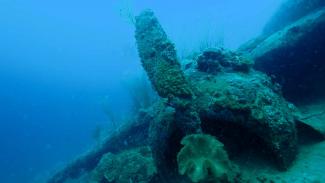
Mitchell Bomber is an excellent example of a WWII plane wreck, while further north the USS Boston and Coral Queen are also fantastic wreck dives. A night dive on the Coral Queen is a dive with a difference. Descending just as the sun sets, divers will be greeted by literally millions of Flashlight Fish leaving the holds of the wreck, lighting up the water with their impressive show of bio-luminescence.
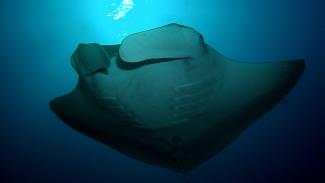
Further afield is Babang Island, part of a submerged mountain chain that rises to the surface and has superb fringing reefs. Around the island are numerous sea-mounts that attract apex predators, including Hammerheads & Tiger Sharks, Even more remote, the Purdy Islands attract enormous numbers of larger fish, including large schools of Barracuda, Nurse Sharks & sometimes Manta Rays.
The visibility at theses remoter islands is usually fantastic due to their distance from the mainland. Between July & September, Sperm Whales pass these tiny tropical islands and are sometimes spotted by Liveaboards.
When to dive
Madang can be dived all year round. While it can, and does, rain at any time, May - October receives the largest rainfall, which creates run-off and reduces visibility at sites closer to the mainland.
Getting there
Madang has an airport and is a 60 minute flight from Port Moresby, the capital of Papua New Guinea to the south.
Activities
Madang has a good variety of shops & restaurants, an interesting craft market and good tourist facilities. There is also an excellent golf course nearby. For those looking to really explore the area, there are plenty of sight-seeing tours on offer, or you could hire a car and check out the local attractions for yourself. It is also possible to arrange trekking.
Resort and liveaboard options
There are a few accommodation options, both within the town itself and dotted around the area. If you are looking to dive locally, rather than with a Liveaboard, Jais Aben Resort & Madang Resort are the only resorts with dive centres.
You might also enjoy...
Tubbataha Reef
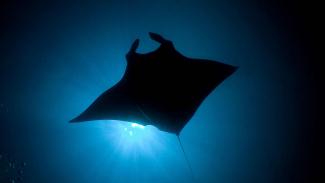
Tubbataha Reef in the Philippines may be the country's most famous diving spot, certainly for larger marine life. This small group of islands and atolls that give their name to the Tubbataha Reef National Park lie at the centre of the Sulu Sea.
The depth of the sea brings cold, nutrient rich waters to the surface around these remote atolls. This brings not only large marine life, but a huge biodiversity too.
Bohol
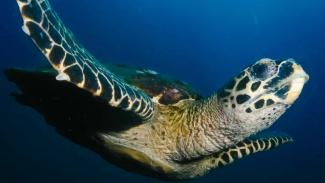
The island of Bohol lies just to the east of Cebu in the Viasayas region of the Philippines and is a popular island for tourists.
The area's diving is also a major attraction, with great macro life, plentiful turtles and lovely coral reefs. Good diving options are available on the west coast, and also the quieter south-east region of Anda.
Cebu
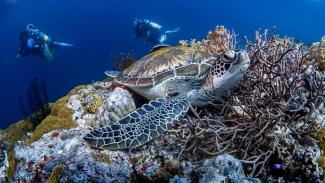
Cebu is the most accessible island in the Visayas, and home to some wonderful scuba diving.
Diving Malapascua is a thrill for more advanced divers due to regular sightings of Thresher Sharks. Oslob, to the south of Cebu City is famous for whale sharks, while you can dive on beautiful coral reefs in Moalboal or Mactan Island.
This is a great area for island-hopping, combining well with Bohol and Negros Islands.
Wakatobi
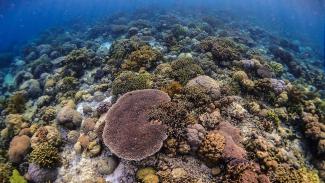
The islands that make up the Wakatobi chain have some of the world’s best diving with atolls, walls, fringing reefs, sea mounts & a barrier reef contributing to the almost limitless diving opportunities.
The national park comprises of four main islands, Wangi Wangi, Kaledupa, Tomea & Binongki (thus the name WaKaToBi) the reach out from the south-eastern tip of Sulawesi.
Coron Bay & El Nido
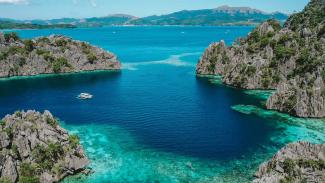
Coron Bay's diving is all about shipwrecks. Here, a fleet of Japanese warships were sunk in WWII, creating one of the Philippine's most popular and unique diving destinations.
There is more good diving around El Nido, which has great beaches and lovely coral reefs.
Kavieng