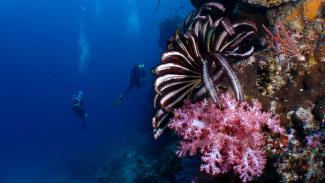
Thailand's southern Andaman sea boasts numerous beautiful islands & beaches, plus some great diving opportunities.
The southern Andaman region of Thailand is less developed than further north, offering a refreshingly relaxing alternative to the hustle & bustle of Phuket & even Ko Phi Phi.
The most famous dive sites are the twin sea mounts of Hin Daeng & Hin Muang - home of the Manta Ray - while the picturesque islands of Ko Haa also have a number excellent sites for both beginners & more experienced divers.
Highlights


Best diving spots
Hin Daeng & Hin Muang, meaning Red Rock & Purple Rock, are two sea-mounts located south from Ko Lanta, right out in the Andaman Sea. They are Thailand’s deepest dive sites, plunging to between 50 & 70 metres and offer the chance to see larger pelagic life, with Manta Rays popular visitors & Whalesharks seen occasionally.
Even if the giants aren’t around though, these two dive sites are still teeming with life, with Tuna, Trevally, Rainbow Runner & Mackeral all hunting on the numerous smaller reef fish. Chevron & Yellowtail Barracuda lurk in the blue, while Batfish, Snapper, Morays & plenty critters also call these sites home.
Hin Muang is fully submerged, with its anemone-covered top at around 10m. It can receive strong currents and has little protection, so check conditions before you go. Hin Daeng is the larger of the two mounts & just reaches the surface. It offers greater protection and is the easier of the two sites to dive. Due to the depths, currents & exposed nature of the sites, they are only recommended from more experienced divers.
West of Ko Lanta, Ko Haa is a group of five uninhabited limestone outcrops. Topside, the islands are stunning and they do not disappoint below the water either, offering good diving opportunities for both beginners & advanced divers alike. They are famous for their visibility, calm conditions and spectacular underwater caverns.
The central area, known as the lagoon, is excellent for macro life, photography & training dives, while Island No. 1 offers boulders & wall diving with the chance to see larger marine life. Ko Haa Yai, the largest island, has two huge, connected underwater caverns which rise about 30m above sea-level inside the cave, allowing divers to surface inside. Just off from Ko Haa Yai is a small rocky outcrop that also has excellent diving.
Looking for the latest liveaboard deals in Thailand? Find your deal
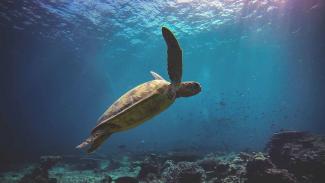
The islands offer a good chance to see Hawksbill Turtles, plenty of reef & macro life, plus occasional Leopard Sharks & Marbled Rays. Whalesharks & Manta Rays have also been known to pay a visit from time to time.
There is also good & snorkelling around Ko Rok to the south, which is famous for its stunning beaches and colourful coral gardens. Further south again, Ko Lipe is beginning to develop as a dive destination, with a range of nice easy dives for beginners plus a spectacular submerged pinnacle called 8-Mile Rock that is famous for sightings of Leopard Sharks, Manta Rays & Whalesharks.
When to dive
The main dive season runs from November until May. While many dive shops close in the low season, it is possible to dive the more protected sites all year round.
Getting there
While liveaboards occasionalkly venture to this region from Phuket, Ko Lanta is generally the best island on which to base yourself to explore this region. The island is fairly easy to reach. The closest regional airport is in Krabi. From here, it is possible to travel by road and ferry to Ko Lanta. Most resorts will arrange transfers for you.
There is also a small airport in Trang to the south and a larger international airport in Phuket. In high season, boats leave daily from Phuket for Ko Lanta and it is also possible to go by bus.
Activities
Apart from the diving, there is also plenty to do on this relaxing island, from sunbathing & massages to thai cooking classes & elephant trekking.
Resort and liveaboard options
There is a huge range of accommodation on the island from cheap bamboo huts to luxury hotels. The cheapest accommodation costs just a few US dollars per night, but if you want real luxury, it is possible to pay hundreds of dollars. Most of the resorts & tourist facilities are on the west coast, which has the best beaches.
You might also enjoy...
Langkawi
Situated on the west coast of Peninsular Malaysia, close to the Thai border, is the island of Langkawi.
The island is one of Malaysia’s most popular tourist spots, with great beaches, beautiful scenery, great shopping and plenty to do.
Apo Reef
Lying off the west coast of the Philippines island of Mindoro Island is Apo Reef, a huge coral reef system. This reef is in fact the second largest single coral reef in the world.
The geography of the reef has created two internal lagoons, with spectacular plunging walls around the outside, comprising a total area of 34sq km.
Sipadan & Mabul Island
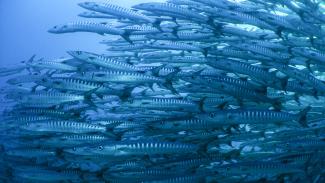
Sipadan is Malaysia’s most famous diving spot. Nearby, Mabul Island offers more excellent diving for smaller marine life, and a good choice of dive resorts.
These nutrient-rich waters attract huge numbers of Turtles, while the area is also home to large number of White-tip Reef Sharks, Bumphead Parrotfish, Trevally and Barracuda.
Negros & Dumaguete
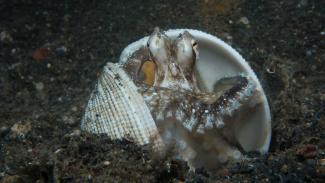
Negros Island is a large island in the Visayas. It’s eastern shore is separated from Cebu by a narrow channel, while it’s west coast faces the Sulu Sea. Much of the diving is in the south of the island.
Like many of the Philippines dive spots, it is blessed with the combination of big fish encounters and fascinating smaller critters that will keep avid divers happy for many dives.
Scuba Diving Terms - A Dummies Guide

Frans Daniels
Scuba-diving, like many activities seems to have a language all of its own, with confusing concepts, technical terminology and an ocean of jargon to decipher.
To help newcomers break through this barrier we've developed a dummies guide to scuba diving, so that you can get to grips with what divers are talking about. Find out what SCUBA stands for, what PADI is, what it is to be narked, and so much more.
Redang